


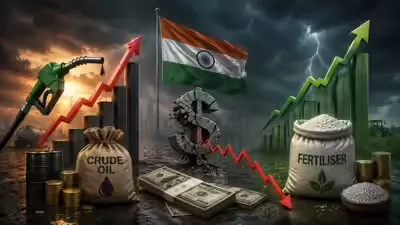
Nirmala Sitharaman confirms extensive food buffer networks are fully secured, while treasury tracks second-round logistics overheads despite the recent de-escalation in global energy markets.
Add businessleague.in as a Preferred Source


The institutional framework guiding subcontinental fiscal planning is actively re-aligning to manage a complex series of global and domestic resource constraints. Addressing industry leaders and economic planners on Monday, June 15, 2026, Finance Minister Nirmala Sitharaman formally detailed the India economic challenges inflation Sitharaman 2026 roadmap. The financial chief confirmed that while core local metrics remain resilient, the government is moving to a defensive stance to protect the economy from external supply chain shocks and unpredictable weather patterns.
The high-level policy update follows a volatile period across global commodity networks.
While recent progress toward a diplomatic truce in West Asia has helped cool raw international crude oil tickers, the minister clarified that the operational risks hitting local budgets have expanded into secondary transport sectors.
To prevent these global pressures from triggering widespread retail inflation, the Center has activated emergency agricultural safety nets, building up extensive national buffer stocks to secure domestic food security.
Also Read | Viral Trump Lookalike Buffalo Rescue: Saved From Eid Sacrifice
The Four-Front Vulnerability: Breaking Down the National Threat Matrix
The economic briefing out of North Block structures the country’s near-term headwinds across four distinct variables. These elements are interacting to create a challenging environment for corporate production costs and rural consumption.
The primary concern highlighted by the minister centers on the total cost of moving goods across international waters.
Even with raw oil prices stabilizing, the soaring cost of maritime insurance and high-seas transit risks are keeping import costs elevated.
These logistics surcharges act as a direct tax on inbound trade, adding pressure to India’s trade balance and driving up manufacturing expenses for industries that rely heavily on imported components.
Slicing Through the Subsidized Shield and Agricultural Safety Blocks
The government’s immediate focus is on protecting the rural economy, which faces twin challenges from unpredictable global commodity prices and localized weather shifts:
-
The Fertilizer Subsidy Strain: International chemical markets are experiencing significant price swings, driving up the cost of raw inputs like urea, diammonium phosphate (DAP), and potash. To protect farming margins and keep retail prices affordable for local growers, the Center is absorbing these extra expenses, a strategy that threatens to expand the country’s total subsidy spending.
-
The Deficient Monsoon Shield: The policy shift arrives right as weather bureau computers issue a formal El Niño warning, cutting total seasonal rainfall projections down to a deficient 90% of the Long Period Average (LPA). To insulate urban and rural food shelves from sudden supply drops, the Food Corporation of India (FCI) has locked down massive grain reserves, ensuring steady food supplies even during extended dry spells.
Also Read | Viral Trump Lookalike Buffalo Rescue: Saved From Eid Sacrifice
Summary Ledger: Tracking Core Headwinds and Center Reductions
The interaction between these shifting global factors and local policy responses shapes the current fiscal landscape:
| Evaluated Risk Arena | Primary Underlying Resource Catalyst | Real-World Impact on Local Industry | Active Government Defensive Strategy |
| Energy Logistics | Higher ocean freight insurance premiums and transit risks. | Increases total oil procurement costs despite lower raw oil tickers. | Shifting to long-term supply deals; maximizing local port efficiencies. |
| Raw Material Inflows | Volatile global commodity pricing and broken logistics links. | Puts structural strain on production expenses for local factories. | Streamlining customs processing; supporting local component alternatives. |
| Agricultural Inputs | High international volatility across basic chemical inputs. | Threatens to increase the state’s total subsidy spending. | Absorbing price spikes to ensure steady retail rates for growers. |
| Weather Variables | Equatorial Pacific ocean warming (El Niño onset). | Threatens crop yields across the rainfed Monsoon Core Zone. | Activating massive food buffers to prevent artificial retail price drops. |
Note: The mathematical re-alignment of industrial tracking matrices—such as Monday’s launch of the updated 2022-23 Wholesale Price Index (WPI) base year series—reveals that factory-gate input inflation hit an uncomfortable 9.68% in May, underlining the real-world pressures hitting local manufacturing lines.
The minister also addressed the challenges moving through foreign exchange markets, where shifting global monetary policies continue to exert pressure on emerging market currencies.
However, Sitharaman reassured investors that the country’s external position remains exceptionally strong.
Backed by a resilient services export sector and robust foreign exchange reserves, the financial system has built up a powerful protective cushion, allowing the Reserve Bank of India to manage short-term currency dips without risking long-term stability.
Five Sequence Steps Validated to Insulate the Domestic Market
To navigate this period of global uncertainty and protect household budgets from rising costs, financial planners are deploying a five-step insulation strategy:
Ultimately, managing these economic challenges requires balancing immediate disruptions with long-term financial discipline. While tech sector leaders like Microsoft’s Satya Nadella remind us to protect institutional knowledge during major economic shifts, managing primary resource networks requires a highly practical approach.
By utilizing extensive national food buffers, absorbing international fertilizer spikes, and maintaining large foreign exchange reserves, the country is navigating this global volatility safely.
This proactive, data-driven approach protects the purchasing power of everyday citizens, limits retail inflation risks, and keeps the domestic economy on a steady path toward long-term development.
FAQ Section
What are the primary concerns outlined in the latest India economic challenges inflation Sitharaman 2026 brief?
Finance Minister Nirmala Sitharaman highlighted a combination of four core challenges facing the economy: volatile global crude oil procurement costs driven by high shipping insurance premiums, severe pressure on imported manufacturing raw materials, price swings in international fertilizer markets, and a potential shortfall in summer rainfall due to El Niño.
How is the government preparing for a below-normal monsoon season this year?
To insulate consumers from potential food shortages and counter artificial price spikes, the government has built up and secured extensive national buffer stocks of essential food grains. These strategic food reserves will be deployed systematically into local markets to balance supply gaps if the summer rains fall short of long-term averages.
Why do crude oil procurement costs remain high despite recent de-escalation in West Asia?
While the raw international price of crude oil has cooled following recent diplomatic progress between the U.S. and Iran, the total cost of importing energy remains high. This lag is caused by elevated freight risks and soaring maritime insurance premiums across shipping corridors, which add structural logistics overheads to every barrel purchased.
Also Read | Viral Trump Lookalike Buffalo Rescue: Saved From Eid Sacrifice
End…
Add businessleague.in as a Preferred Source

